
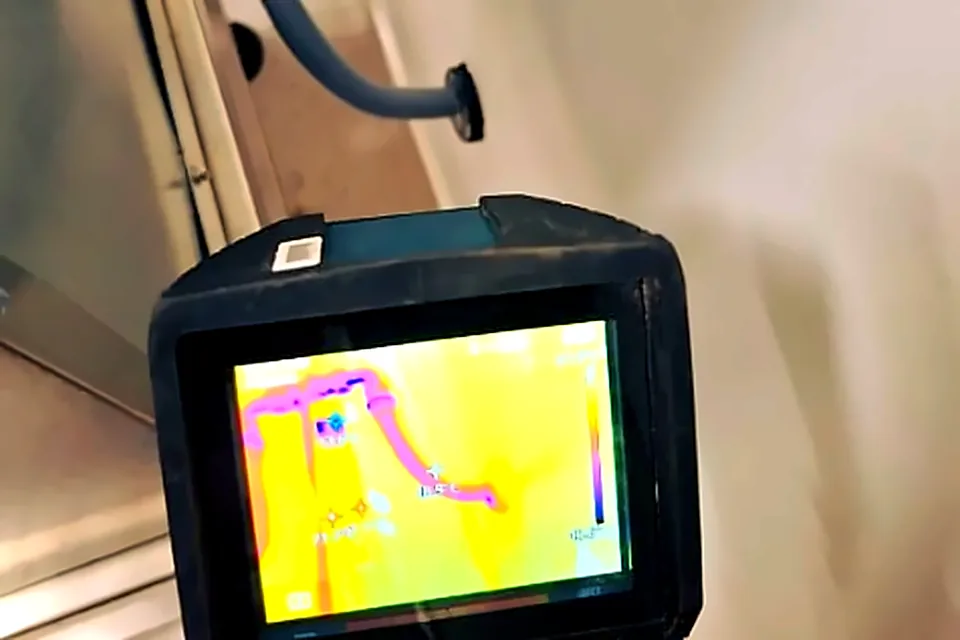
What are the signs of a slab leak?
The main signs of a slab leak are a warm or hot spot on the floor, the sound of running water when nothing is on, a water meter that keeps moving, an unexplained rise in the water bill, damp or warped flooring, low water pressure, a musty smell, and new cracks in floors or walls.
A slab leak is a leak in a water line under a home's concrete foundation. Because the pipe is buried, you see the effects rather than the leak itself. One sign alone isn't proof, but two or three together are a strong reason to get the lines tested.
8 signs, explained
1. A warm spot on the floor
Hot-water lines run under the slab to kitchens and bathrooms. When one leaks, the hot water warms the concrete above it. Walk barefoot across tile or concrete floors and feel for a patch that's warmer than the rest.
2. Running water with everything off
A faint hiss or rushing sound near a wall or floor, when no fixtures are running, often means water is escaping under pressure.
3. The meter keeps moving
With all water turned off, a moving meter confirms a leak. Closing the house shutoff helps tell a slab leak from a yard leak.
4. A higher water bill
A slab leak runs around the clock, so it shows up on the bill even when it's too small to see.
5. Damp or damaged flooring
Carpet that feels wet, wood that cups or warps, and tile that loosens can all come from moisture rising through the slab.
6. Low water pressure
Water escaping before it reaches your fixtures can lower pressure at several faucets at once.
7. A musty smell or mildew
Moisture trapped under flooring or behind baseboards can lead to mildew smells, especially in closets and along exterior walls.
8. New cracks
Water saturating the soil under a slab can contribute to movement, which may show up as new cracks in floors, tile or drywall.
Hot-water vs cold-water slab leaks
| Hot-water line | Cold-water line | |
|---|---|---|
| Warm floor spot | Common | No |
| Water heater runs more | Often | No |
| Meter moves | Yes | Yes |
| Easiest clue | Feel the floor | Meter test |
What to do next
- Do the water meter test to confirm a leak.
- Note where you feel warmth, hear water or see damage.
- Don't break up the floor to look. A precise location saves concrete and flooring.
- Get professional slab leak detection and repair to pinpoint the leak and compare spot repair, reroute and repipe options.
Do slab leaks happen in new homes?
Yes. Many Cibolo subdivisions were built after 2000, and slab leaks can still happen in them. Clay soil movement, a pipe nicked during construction, or a line rubbing against rebar can cause a leak in a home that's only a few years old.
If your home is still under a builder warranty, check whether plumbing below the slab is covered and for how long. Many builders cover plumbing for a shorter period than the structure. Report the problem in writing as soon as you notice it.
What happens if you ignore a slab leak?
- Water bills keep climbing as the leak grows
- Flooring warps, lifts or grows mold underneath
- Wet clay swells and can shift sections of the foundation
- Hot-water leaks keep your water heater running and raise energy costs
Hot-water slab leaks are the most expensive to ignore, because you pay for the water and for the energy to heat it around the clock. If your water heater seems to run all the time, check this first.
Waiting rarely makes a slab leak cheaper. When signs show up, the next step is slab leak repair in Cibolo, which starts with pinpointing the exact spot.